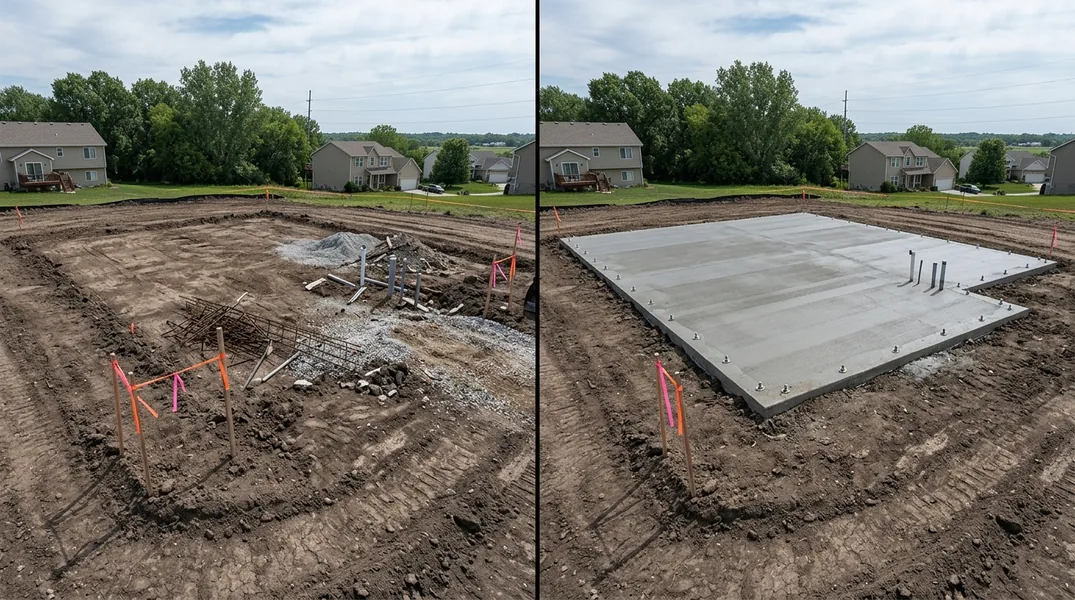
Understanding New Construction Concrete Slabs in Lincoln, Nebraska
Buying a new home is one of the most significant investments you'll make, and the foundation is literally where everything begins. If you're purchasing a new construction home in Lincoln, understanding the concrete slab beneath your feet is essential. Unlike older homes where you might inherit decades of history and wear, new construction offers you the opportunity to catch potential issues before they become costly problems. The concrete slab serves as the base for your entire home, supporting walls, flooring systems, and everything inside.
Many homebuyers focus on finishes, square footage, and neighborhood amenities but overlook the foundation inspection process. This is a critical mistake. A properly poured and cured concrete slab should last for decades, but poor installation, inadequate site preparation, or material defects can lead to settling, cracking, and structural issues that are expensive to repair later. Before you sign the final papers, you need to know what you're looking at and what questions to ask your builder.
What to Look for During Your Foundation Inspection
A thorough builder foundation inspection should happen before closing, ideally with a professional structural engineer or experienced home inspector present. Start by examining the slab surface for cracks. Minor hairline cracks are often normal as concrete cures and settles, but larger cracks (wider than 1/8 inch or longer than a few feet) warrant closer attention. Look for patterns too. Cracks radiating from a central point or following a diagonal line across the slab can indicate settling issues or subgrade problems that need professional evaluation.
Check the perimeter where the slab meets the foundation stem wall. This transition should be clean and level, without significant gaps or uneven surfaces. Walk the entire slab and note any areas that feel soft, bouncy, or show signs of moisture. Look for efflorescence, a white chalky residue that appears when water moves through the concrete. While not necessarily a deal-breaker, it indicates moisture movement that should be monitored. Also inspect for proper drainage slopes around the foundation. The ground should slope away from the house to prevent water from pooling against the slab edge.
New Home Foundation Warranty: What's Actually Covered
Every new construction home in Lincoln should come with a new home foundation warranty, but these warranties vary significantly in scope and duration. Most builder warranties cover structural defects for one to ten years, depending on the builder and the specific warranty program. It's crucial to understand exactly what your warranty covers before you close. Does it cover cosmetic cracking only, or does it include settling and structural movement? Are there exclusions for normal concrete curing or environmental factors like drought or excessive moisture?
Read your warranty documents carefully and ask your builder or their representative to walk you through the specific coverage. Some warranties require you to report issues within a certain timeframe, so you need to know the deadline for submitting claims. Keep detailed records and take photos of any concerns you notice during the first year. If you discover a foundation issue, report it immediately in writing to preserve your warranty rights. The cost of Concrete Repair & Resurfacing can be substantial, so having warranty coverage is invaluable.
Common Concrete Slab Issues in New Construction
Understanding the most common problems that arise in new construction concrete slabs helps you spot red flags during your inspection. Differential settling occurs when different sections of the slab settle at different rates, creating uneven surfaces or step-like transitions. This is often caused by inadequate or uneven soil preparation beneath the slab. Concrete heave is the opposite problem, where the slab rises due to frost action, expansive soils, or moisture changes. Both conditions can cause doors and windows to stick, drywall to crack, and floors to feel uneven.
Slab cracks fall into several categories. Shrinkage cracks develop as concrete cures and lose moisture, typically appearing within the first few weeks or months. These are usually minor and don't affect structural integrity. Structural cracks, on the other hand, indicate underlying problems with the foundation itself and require professional assessment. Corrosion of reinforcing steel, while rare in properly constructed slabs, can occur if the concrete was exposed to aggressive chemicals or if the protective concrete cover over the rebar is insufficient. Moisture intrusion is another concern, particularly in basements or slab-on-grade homes where water can migrate through the concrete and create dampness or mold issues inside.
Builder Foundation Inspection Process: What to Expect
The builder foundation inspection is typically your last chance to identify and document any issues before you take ownership. Most builders will schedule this inspection a few days before your closing date, giving them time to address problems if needed. You have the right to hire an independent home inspector or structural engineer to conduct or verify this inspection. This third-party expert can provide an objective assessment and catch issues that a builder's inspector might overlook or minimize.
During the inspection, the professional will use various tools and techniques to evaluate the slab. They may use a level to check for high spots and low spots, measure crack widths with a crack gauge, and use moisture meters to detect dampness. They'll also inspect the basement (if applicable), crawlspace, and the relationship between the slab and the rest of the home's structure. Don't be shy about asking questions. A good inspector will explain their findings clearly and provide recommendations in writing. If significant issues are identified, you can request repairs, credits, or in some cases, renegotiate the purchase price before closing.
After Closing: Ongoing Slab Maintenance and When to Call Professionals
Once you close on your new home, your responsibility for the concrete slab begins. Proper maintenance extends the life of the foundation and helps prevent minor issues from becoming major problems. Keep the area around the slab clean and ensure that gutters and downspouts direct water away from the foundation. Seal any cracks you notice, especially if they're wider than 1/8 inch, to prevent water infiltration. Monitor the slab throughout the first year, as this is when most settling and curing-related issues appear. Document any new cracks, uneven areas, or moisture concerns with photos and dates.
If you notice significant cracks, settlement issues, or persistent moisture problems, don't wait to address them. The sooner you identify and repair foundation issues, the less damage occurs to the rest of your home. Professional foundation repair can range from simple crack sealing to more involved work like mudjacking or underpinning. For concrete surface issues like spalling or scaling, Concrete Repair & Resurfacing specialists can restore the slab's integrity and appearance. If you're in Lincoln and need expert evaluation of your new home's foundation, don't hesitate to reach out to Lincoln Concrete at (531) 530-3730 for a free estimate.
Final Checklist Before Closing on Your New Home
Before you sign the final papers, use this checklist to ensure you've thoroughly evaluated the concrete slab and foundation. First, schedule a professional inspection at least a week before closing. Walk the entire slab with the inspector and ask about any visible cracks, uneven areas, or moisture signs. Request a written report that documents the slab's condition and any issues found. Review your warranty documents and understand exactly what's covered, the duration of coverage, and the process for filing claims. Take photos of the slab in good lighting, showing overall condition and any specific concerns.
Ask your builder about the concrete specifications, including the mix design, reinforcement details, and site preparation methods used. Request documentation of any testing or inspection performed during construction. Confirm that proper drainage is in place around the foundation perimeter. Finally, establish a maintenance plan for the first year and beyond. Keep all inspection reports, warranty documents, and maintenance records in a safe place. If you have any concerns or questions about your new construction slab, the experts at Lincoln Concrete are ready to help. Call (531) 530-3730 or visit our website to learn more about foundation assessment and contact us with your questions.
Looking for a professional concrete contractor in Lincoln? Lincoln Concrete responds fast for all your concrete needs.
Get a Free QuoteOur services: Concrete Driveways · Concrete Patios · Stamped & Decorative Concrete