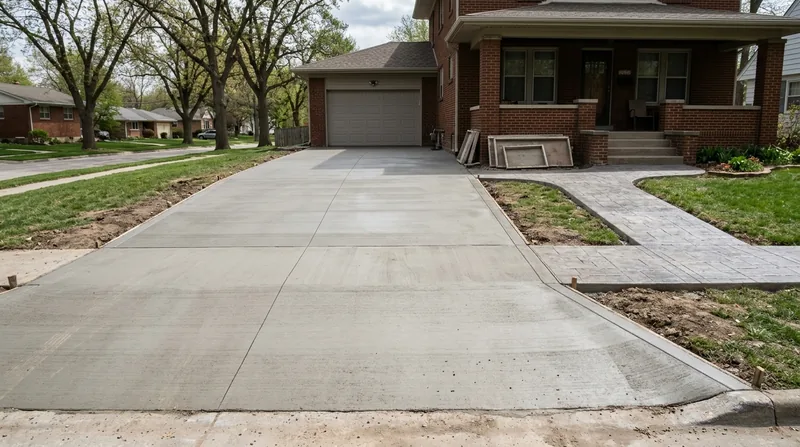




Concrete slabs and foundations are the backbone of any structure in Lincoln, Nebraska, and the local terrain makes them far more challenging than most homeowners realize. Lincoln sits on silty clay loam over clay subsoils with real shrink-swell potential, and the freeze-thaw cycles that dominate our winters cause slabs to settle, heave, and crack at the joints. Whether you're building a new garage foundation in Williamsburg, adding a shed slab in Country Club, or pouring a room addition on a brick Craftsman home near South, the difference between a slab that lasts 30 years and one that fails in 10 comes down to proper engineering, reinforcement, and base preparation. Lincoln Concrete installs poured concrete slabs and footings with engineered thickness, steel reinforcement, and compacted subgrade that stands up to Nebraska's moisture swings and freeze cycles. Call us at (531) 530-3730 for a free estimate, or explore our full range of concrete repair and resurfacing services if an existing slab needs attention.
Why Concrete Slabs and Foundations Matter in Lincoln's Variable Climate
Lincoln's climate is unforgiving for concrete. Winter brings dozens of freeze-thaw cycles, heavy de-icing salt, and ground saturation during spring thaw. Summer thunderstorms and violent weather add lateral pressure and water infiltration risk. A poorly built slab will heave in winter, settle in spring, and develop cracks and spalling within a few seasons. A properly engineered foundation with correct thickness, reinforcement, and base compaction will handle these stresses for decades.
- Undersized or unreinforced slabs crack and settle as clay beneath them shrinks and swells with moisture.
- Inadequate base preparation allows water to pool and freeze, lifting the slab upward and creating trip hazards.
- Poor drainage around foundation edges leads to water infiltration into basements and crawl spaces.
- Unsealed concrete absorbs de-icing salts that scale the surface and accelerate deterioration.
- Shallow footings below frost depth (typically 42 inches in Lincoln) heave when ground freezes.
Getting the foundation right from the start avoids costly repairs and protects your investment for the long term.
Key info: Lincoln's frost line sits at approximately 42 inches deep. Any slab or footing installed above that depth will heave during winter freeze cycles. We dig deep and build to code to keep your foundation stable year-round. See the City of Lincoln building permit requirements for driveway and foundation specifications.
How We Build Concrete Slabs and Foundations in Lincoln
Our process begins with a site assessment and soil evaluation. We determine frost depth, check for poor drainage or existing settlement issues, and calculate the slab thickness and reinforcement needed for your specific load and soil type. We then prepare the subgrade, install a compacted base course, set formwork to grade, and pour engineered concrete with proper air entrainment and finishing to ensure durability and slip resistance.
- We conduct a site visit to assess soil type, drainage, frost depth, and any existing foundation problems.
- We prepare and compact the subgrade to remove voids and ensure uniform bearing.
- We install a properly graded base course (typically 4 to 6 inches of compacted stone) to allow water drainage and prevent frost heave.
- We set forms to exact grade and establish proper slope for water runoff.
- We place reinforcing steel (rebar or wire mesh) at the correct height and spacing for the load and span.
- We pour air-entrained concrete and finish the surface for slip resistance and proper drainage.
- We allow proper curing time and protect the slab from freeze-thaw damage during early life.
This methodical approach ensures your slab or foundation performs reliably through Nebraska's harsh seasons.
Local example: A homeowner in Eastridge wanted a new garage foundation on a 1950s ranch home. We excavated to 44 inches, installed a 6-inch compacted stone base, placed rebar at 18-inch centers, and poured a 6-inch slab with a 4-inch footing below grade. Five years later, the slab remains flat and crack-free while neighboring properties have settled and cracked. Proper depth and preparation make the difference. Learn more about our garage floor and foundation work.
Concrete Slabs and Foundations: Methods and Approaches
| Approach | Description | Best for |
|---|---|---|
| Monolithic Slab | Slab and footing poured in a single pour. Perimeter footing drops below frost line while interior slab sits above grade. | Sheds, garages, and room additions where frost protection and interior support are equally important. |
| Floating Slab | Slab poured on a compacted base without a below-grade footing. Relies on proper base drainage and slope to shed water. | Patios, walkways, and structures where frost heave risk is lower and interior loads are light. |
| Stem Wall Foundation | Concrete footing below frost line with a vertical stem wall rising above grade. Slab sits on top of the stem wall. | New construction and additions where finished floor height must be elevated or basement/crawl space access is needed. |
| Reinforced Thickened Edge | Slab with a thickened, reinforced perimeter edge and below-grade footing. Interior remains standard thickness with lighter reinforcement. | Garages and utility buildings where perimeter loads are high but interior loading is moderate. |
Concrete Slabs and Foundations Cost in Lincoln: What to Expect
Concrete slab and foundation pricing in Lincoln typically starts at $5 per square foot for a basic floating slab on a prepared base, but most residential jobs run $6 to $10 per square foot depending on complexity. A monolithic slab with a below-grade footing costs more because we must excavate deeper and place additional reinforcement. Soil conditions, site access, existing conditions, and the need for drainage work all affect the final price.
For example, a 400-square-foot garage slab with a monolithic footing in Hickman might cost $3,200 to $4,000, while a simple shed slab in Wahoo could be $1,200 to $1,600. A room addition foundation in Country Club with poor drainage and compacted clay might require site work, additional base preparation, and perimeter drainage, pushing the cost toward the higher end or beyond.
Always get two or three estimates from insured contractors in your area. Each will assess soil, frost depth, and drainage differently, and prices will reflect those differences. Visit our pricing page for a detailed breakdown, or call (531) 530-3730 for a free on-site estimate specific to your project.
What to Look for When Hiring a Concrete Contractor Near Lincoln
Finding the right contractor for your slab or foundation is critical because the work happens once and must last decades. Look for contractors who understand Lincoln's clay soil, freeze-thaw cycles, and frost depth requirements. Ask about their experience with similar projects in your neighborhood, whether they've worked on historic homes in the Near South district, newer subdivisions like Wilderness Hills, or mid-century ranches in Meadowlane.
Always verify that your contractor carries general liability and workers compensation insurance. Ask for a certificate of insurance on file before work begins. Check references from recent jobs in Lincoln and the surrounding towns like Ashland, Crete, and Seward. Understand permit requirements for your lot, especially if your property is in a historic district or subject to HOA restrictions. Ask your contractor to explain the permit process and timeline so you know what to expect.
Get everything in writing: the scope of work, materials, timeline, and final price. Discuss how the contractor will handle base preparation, frost depth, reinforcement, and curing. Do not hire based on price alone. A cheap slab that fails in five years costs far more than a properly engineered foundation that lasts 30. For a free consultation and estimate, contact Lincoln Concrete or call (531) 530-3730. We respond within 24 hours and provide no-obligation estimates for all slab and foundation work in Lincoln and surrounding areas.
Concrete Slabs & Foundations in Lincoln: Pricing Guide
| Service | Price | Details |
|---|---|---|
| Floating slab (4-6 inches, basic reinforcement) | Starting at $5/sq ft | Poured on prepared base. Cost increases with soil prep, drainage work, or poor existing conditions requiring deeper excavation |
| Monolithic slab with footing | Starting at $7/sq ft | Slab and footing poured together below frost line. Thicker, reinforced perimeter footing adds material and labor cost versus floating slab |
| Stem wall foundation with slab | Starting at $8/sq ft | Footing below frost, vertical stem wall, and slab on top. Additional forming and concrete volume increase cost; necessary for elevated floors |
| Site work, drainage, or poor soil remediation | On estimate | Soft spots, high water table, or inadequate existing base require removal and replacement. Cost depends on depth and extent of rework needed |
| Travel and mobilization | Included | No separate charge for jobs in Lincoln and surrounding service areas within 30 miles. Farther distances negotiated per project |
| Free estimate | No cost | On-site assessment with soil and frost evaluation. Response within 24 hours at (531) 530-3730. No obligation to book work |
Indicative pricing, the exact cost depends on square footage, finish, and site access. Free personalized estimate within 24h at (531) 530-3730.


