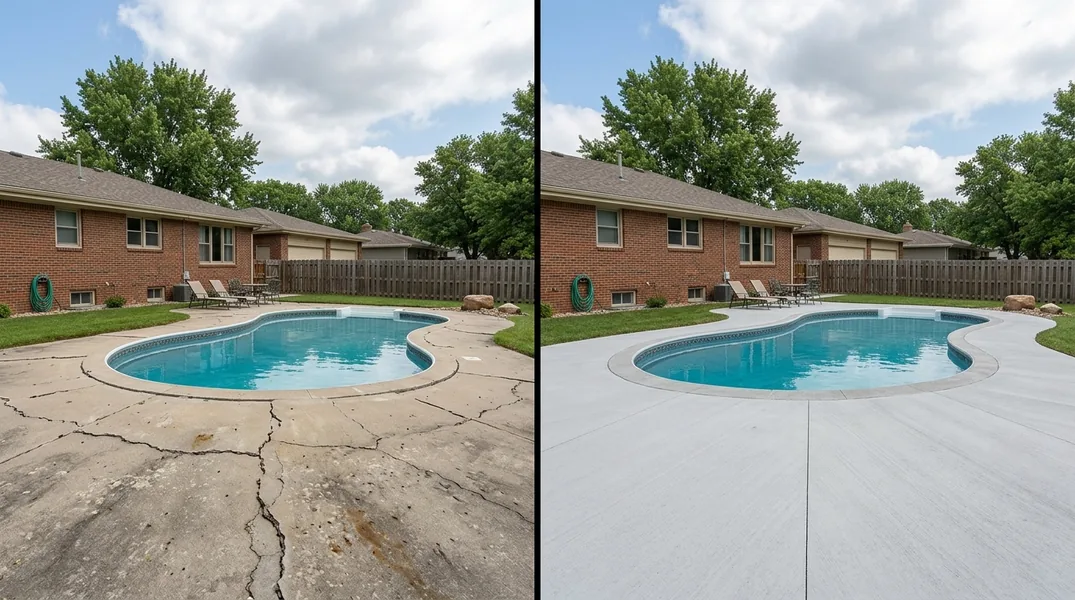
Concrete vs. Pavers: The Core Differences
When it comes to upgrading your Lincoln home's outdoor spaces, the choice between concrete and pavers is one of the most important decisions you'll make. Both materials have earned their place in modern landscaping, but they offer distinctly different benefits and drawbacks. Understanding these core differences will help you make an informed decision that aligns with your budget, aesthetic preferences, and long-term maintenance expectations.
Concrete Driveways are poured as a single, unified surface, creating a seamless expanse of durable material. Pavers, by contrast, are individual units laid in patterns across a prepared base, offering modularity and design flexibility. The fundamental construction methods lead to different performance characteristics, especially in harsh Nebraska winters where freeze-thaw cycles can stress materials significantly. For homeowners in Lincoln evaluating these options, knowing how each material responds to seasonal changes is critical to avoiding costly repairs down the road.
Durability and Performance in Lincoln's Climate
Lincoln experiences cold winters with significant temperature fluctuations, and this climate reality shapes how concrete and pavers perform over time. Concrete, when properly installed and sealed, can last 25 to 40 years or more in our region. However, the repeated freeze-thaw cycles that characterize Nebraska winters can cause surface cracking and spalling if the concrete isn't air-entrained or adequately maintained. A well-constructed concrete surface with proper drainage and seasonal sealing will hold up admirably through decades of weather exposure.
Pavers offer a different kind of durability. Individual units can last 25 years or longer, but the real consideration is the base and joints. If one paver cracks or settles, it can be replaced individually without affecting the entire surface. This modularity is a genuine advantage in climates like ours where ground movement and settling are common. However, pavers require more attention to joint maintenance, as weeds and erosion can compromise the sand or polymeric material between units. The cumulative maintenance burden often makes pavers more labor-intensive over their lifetime, even if individual components are replaceable.
Concrete Patios and Aesthetic Options
Many homeowners assume that concrete means a plain gray slab, but modern concrete offers surprising design possibilities. Concrete Patios can be customized with color, texture, and patterns that rival pavers in visual appeal. Stamped and Decorative Concrete techniques allow contractors to create the look of stone, brick, slate, or tile while maintaining the structural benefits of a single, unified surface. These decorative finishes have become increasingly popular in Lincoln, offering homeowners a way to achieve high-end aesthetics without the maintenance burden of traditional pavers.
Pavers excel in providing authentic material variety and a distinctive, textured appearance that appeals to many homeowners. The grout lines between pavers create visual rhythm and can be emphasized or downplayed depending on the design intent. Pavers come in countless colors, shapes, and finishes, from rustic clay to sleek porcelain. If your design vision requires the authentic look and feel of individual stone or brick units, pavers deliver that authenticity in a way that concrete, even when stamped, cannot fully replicate. The choice often comes down to whether you prioritize the look of traditional masonry or the modern versatility of decorative concrete.
Maintenance and Long-Term Care Requirements
Concrete requires regular but straightforward maintenance. Sealing every two to three years protects the surface from water penetration, de-icing salts, and UV damage. Cleaning is simple: a pressure washer handles most dirt and stains. Minor cracks can be sealed to prevent water infiltration and expansion damage. If significant damage occurs, Concrete Repair and Resurfacing services can restore the surface without replacing the entire installation. The maintenance schedule is predictable and relatively low-cost, making concrete an economical choice over decades of ownership.
Pavers demand more hands-on attention. Beyond occasional pressure washing, you'll need to address joint sand or polymeric material that erodes, settle issues where pavers sink or shift, and weed growth between units. Some paver owners find this maintenance rewarding and enjoy the ability to refresh their patio by re-sanding joints or replacing individual damaged units. Others find it burdensome. If you prefer a set-it-and-forget-it approach with minimal seasonal attention, concrete is the lower-maintenance option. If you enjoy active outdoor upkeep and want the flexibility to modify or replace individual elements, pavers may suit your lifestyle better.
Cost Comparison: Concrete Driveways and Patio Pricing in Lincoln
Initial installation cost is often the first consideration for homeowners. Concrete typically costs less upfront than pavers, with pricing generally ranging from $6 to $12 per square foot for a standard driveway or patio, depending on site conditions, thickness, and finishing options. Decorative concrete with stamping or color adds to this base cost but remains competitive with paver installation. Pavers typically run $10 to $20 per square foot or higher, depending on material quality and pattern complexity. For a 500-square-foot patio, this difference can be substantial.
However, total cost of ownership extends beyond installation. Concrete requires periodic sealing, typically costing $0.50 to $1.50 per square foot every few years. Paver maintenance, including joint sand replacement and occasional releveling, can accumulate to similar or higher costs over 20 years. If major repairs become necessary, concrete resurfacing is often cheaper than replacing multiple damaged pavers. When evaluating pricing options, consider both the initial investment and the anticipated maintenance expenses. A free estimate from Lincoln Concrete can help you understand the true cost of either option for your specific project.
Making Your Decision: Which Option Is Right for You?
Choosing between concrete and pavers ultimately depends on your priorities, budget, and lifestyle. If you value affordability, low maintenance, and modern design flexibility, concrete is the compelling choice. If you prioritize the authentic appearance of traditional masonry, enjoy hands-on outdoor care, and want individual component replaceability, pavers may be worth the additional investment and effort. Consider your climate tolerance, your willingness to perform seasonal maintenance, and your design vision for your home's outdoor spaces.
The experienced team at Lincoln Concrete understands both options thoroughly and can guide you through the decision-making process. Whether you're leaning toward a durable concrete installation or exploring the possibilities of pavers, we're here to answer your questions and provide honest, professional advice tailored to your needs. Contact us today at (531) 530-3730 or visit our website to schedule your free estimate. Let's create an outdoor space that enhances your home for decades to come.
Looking for a professional concrete contractor in Lincoln? Lincoln Concrete responds fast for all your concrete needs.
Get a Free QuoteOur services: Concrete Driveways · Concrete Patios · Stamped & Decorative Concrete